
Data & Analytics
Menu

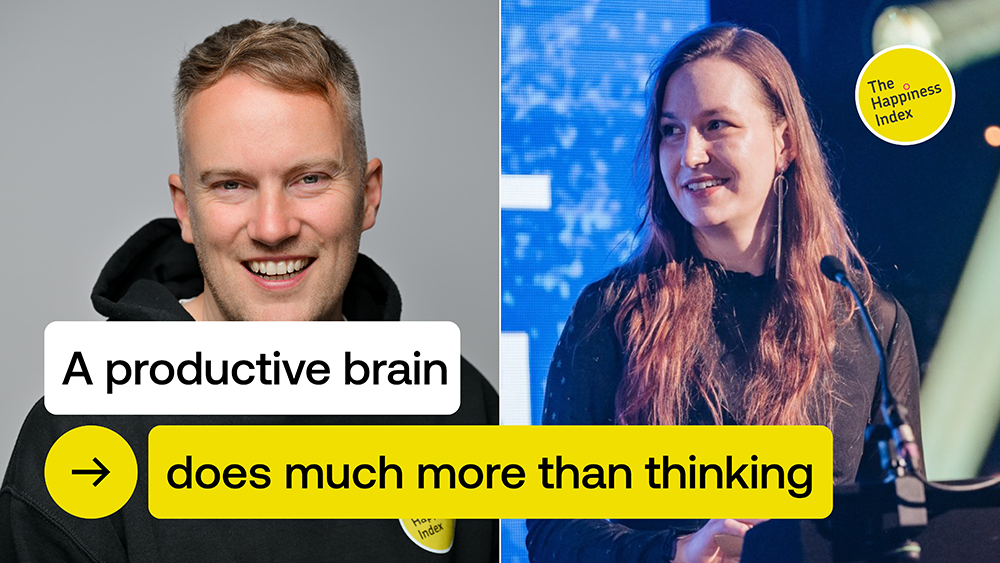
Right now, your brain is keeping your heart beating. It’s reminding you to drink water. It’s managing your body’s energy budget. All of that happens before you get to the thinking part.
This matters because we’re asking people to do increasingly complex work whilst ignoring their body’s basic needs.
We’re draining budgets without realising the cost. Understanding how the brain actually works changes how we measure and improve workplace performance. All of our core offerings and processes at The Happiness Index are underpinned by neuroscience for exactly this reason.
Body budget is the energy you have available to do the things you have to do. This concept, introduced by Lisa Feldman Barrett – world expert in the neuroscience of affect and emotion – describes how your brain acts like a budget manager, constantly predicting your body’s needs and allocating resources accordingly.
Simple tasks like replying to emails can cost wildly different amounts depending on your mental state. If you’re struggling mentally, replying to a single email can be far more draining than if you’re in a good place.
Think about your company for a moment. You probably offer training, development programmes and various benefits. But what’s the utilisation?
If you provide training but people aren’t taking it up, there’s a reason. You’re not actually providing support in a way people can benefit from. Maybe they’re overworked. Maybe they don’t have the body budget to spend on it.
You’re adding another item to an already maxed-out budget.
Your brain constantly predicts what’s needed next.
Not five-year plans. Whether you need water or how to finish a sentence. It’s why you can grab a glass without thinking through each movement.
If you’re thirsty and you just go grab a glass of water, you’re not thinking about it. Your brain has already predicted that’s what you need and what you need to do, without you having to consciously think about extending your arm, grabbing the glass, or opening the tap.
This is where machine learning and AI got their inspiration. The predictive brain.
When you think about the past, you’re not wasting time. You’re processing experiences to feed the prediction algorithm. Your brain learns from yesterday to prepare for tomorrow.
Most of us spend significant time replaying past mistakes or decisions. That feels unproductive, but it’s actually processing, not pointless rumination. Self-reflection and processing previous events all feed the same algorithm your brain uses to predict the future.
Our brain’s processing is far more complex than what we consciously experience, so what we consume matters enormously.
Books, podcasts, and who we spend time with. If so much of our decision-making comes from the subconscious, we need to feed it good stuff.
There’s an old practice of having a worry hour. You designate an afternoon hour for processing worries. Not before bed. Earlier in the day. You have that specific hour to process, so your brain doesn’t carry too much of that into sleep.
At work, this means creating space for people to share what’s going on.
People need time and space to process their experiences for better or worse. When you dismiss it or try to move forward too quickly, the debt compounds. And you pay it back with interest.
Last summer, headlines screamed about cognitive offloading.
One MIT study showed people used less cognitive effort when writing essays with AI. Articles worried we’d all stop thinking critically. Our brains would turn to mush.
But here’s the thing. It was a preprint study, or in other words, a preliminary finding designed to spark further research, not definitive conclusions. As often happens, the media—feeding our appetite for simple answers—sensationalised the findings, despite the authors outlining the study’s limitations and specific context.
This pattern—taking preliminary findings and turning them into doom headlines—says more about us than about the technology.
We want simple villains. AI makes us lazy. Technology ruins thinking. But were all people thinking perfectly critically before ChatGPT? Obviously not. We’ve always had this tendency. AI doesn’t replace thinking. AI is a tool, and critical thinking is how we need to approach using it — just like how we should use Google search, books, or any other tool.
The conversation shouldn’t be about whether AI makes us lazy. It should be about how to use it well. Where does it support thinking? Where can it help us learn or spend more time on things we enjoy?
Neuroscience is the study of nervous systems. The study of who we are as human beings.
For the better part, we’re still working with human beings. They’re the ones who make or break your company.
Most companies spend 50 to 70% of their budget on wages. You want systems that work with human biology, not against it. You don’t want to deplete body budgets on areas that don’t positively impact the business.
The invisible costs are real costs. Change management, uncertainty and learning are expensive for brains. These are some of the most expensive things your brain can do in terms of energy.
We’re asking people to adapt constantly. To learn new things daily or weekly. That costs them. Factor that into your planning. Building a performance culture means designing systems that work with these realities, not against them.
Start by auditing where your people spend their time and energy.
Are low-impact activities draining high-performing people? Are technical problems stealing time every day? Where are the invisible costs?
Understanding these patterns through people data helps you make strategic decisions about where to invest. Not guesswork. Actual evidence of what’s depleting body budgets and what’s driving performance.
Create space for processing the negative. Not dismissing it or moving past it quickly. Actually processing it.
Make support actually usable. Offering training that people don’t have time to complete isn’t support. It’s performative.
Flexible hours for parents to pick up children without stress? That’s real support. That’s understanding body budgets.
Think about how you signal what matters. Putting important activities in core working hours shows they’re genuinely valued. Making people use personal time for company culture activities sends the opposite message.
Your people aren’t machines.
Their brains are complex prediction engines running on limited energy budgets. They need safety to grow. They need space to process. They need support that fits into their actual lives.
Understanding this isn’t soft. It’s strategic. It’s financial.
It’s the difference between systems that work and systems that accidentally sabotage the very outcomes you’re paying people to deliver.
You can’t really grow unless you feel safe. Yes, there are examples where people have overcome terrible situations and come out with a polished story. But it’s better to fix the system than put everyone through a terrible system and hope one or two come out the other side.
Human beings are still running your company. Neuroscience explains how they actually function.
Ignore it at your own expense.
For a detailed guide on how The Happiness Index can help, check out The Little Book of Happiness
Related articles

Book a demo and we’ll show you exactly what your culture data reveals. No hard sell. Just clarity.

Everything you need to understand what drives your people. And what it means for your bottom line.