Data & Analytics
Menu
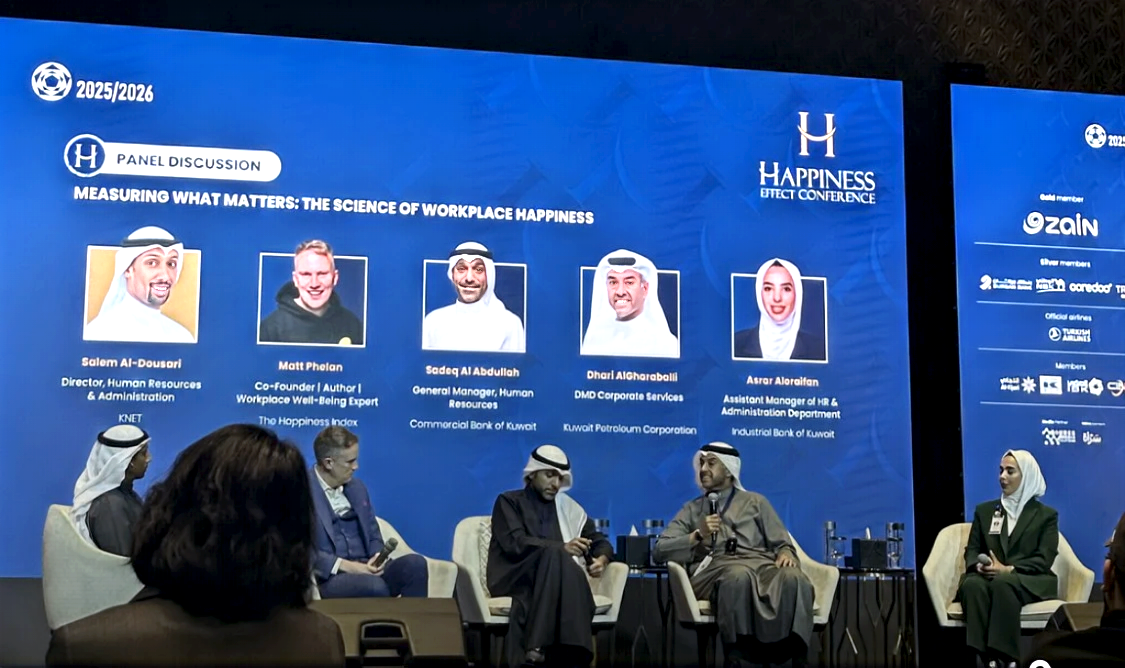
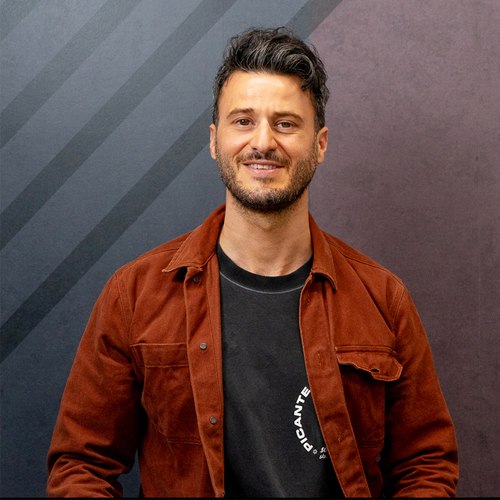
Our co-founder Matt Phelan went to Kuwait, and what we found was a room full of leaders asking the right questions. They weren’t asking about productivity hacks or the latest management fads, but about something deeper: How do we build workplaces where people actually want to show up?
Madalena Carey opened with a line that stopped us in our tracks: “Today, employees hire the company.”
Think about that for a second. The power dynamic has flipped. Your people aren’t just looking for a salary; they’re looking for alignment, purpose, and a place where their values match yours. Leaders who get this are winning. Those who don’t are struggling to fill seats.
Anaïs Nebel broke down confidence in a way we’d never heard before. It’s not one thing; it’s four:
Self-expression
Self-belief
Self-image
Self-esteem
When any of these wobbles occur, performance drops. When all four are strong, your people thrive. It is as simple as that.
The panel “From Policy to Culture: Building Happier Workplaces” brought some serious heat.
Emad Al-Ablani from NBK Group said something every senior leader needs to hear: “All senior execs need to be accessible to their people. It builds connection and trust.”
Nawal H. Bou-Risli flipped the script on purpose: “Build purpose from the bottom up. Don’t tell people what their purpose is.” When you hand down purpose from the top, it feels hollow. When people discover it themselves, it sticks.
Fatma Ahmad shared something we loved: at her organisation, 40% of leadership performance reviews are measured on values. Not lip service—real measurement. Because what gets measured gets done.
Madalena Carey wrapped it up perfectly: “It’s not about the policy. It’s how we implement it.”
Asrar Aloraifan deserves her own section: “Employees don’t suffer from survey fatigue. They suffer from action fatigue.”
The issue isn’t how often you ask for feedback; it’s whether people see change afterwards. Her advice? One or two deep surveys per year and short quarterly pulse checks. But here is the golden rule: Never ask a question you’re not prepared to act on.
When employees share feedback and nothing happens, trust expires. When leaders listen, act, and communicate back, participation increases. Measuring happiness becomes a signal of respect, not a burden.
The closing panel on breaking the stress cycle brought it all home. Dhari AlGharaballi reminded us to get to know our people and what motivates them, while Sadeq Alabdullah noted that the key to all leadership is listening to people.
It’s not revolutionary, but how many of us actually do it?
The conference tackled big themes, from AI and financial literacy empowering choice to how culture drives measurable performance through engagement, recognition, and psychological safety.
The takeaway was simple: workplaces that prioritise happiness and purpose improve lives and deliver real business impact.
We’d never been to Kuwait before, and we came away inspired. The leaders we met aren’t just talking about change; they’re living it. They’re accessible, they’re building purpose from the ground up, and they’re measuring what matters.
And yes, the kanafa was incredible. We’re definitely coming back.
Thank you to Mohammad Ebrahim, Soliman Arab, Abdulqaiom Ali, and the ALGAS Events team for an unforgettable experience. To everyone we met, including Lulwa AlSane, Peter Kelly, Omar Al-Habash, and Nada Yasser—your warmth and leadership left a mark.
The Happiness Effect Conference showed us something powerful: the future of work isn’t about doing more with less. It’s about creating environments where meaning, wellbeing, and growth drive everything. That’s not “soft stuff.” That’s business strategy.
If you want help turning your culture into performance, The Happiness Index can help. The best place to start is by downloading The Little Book of Happiness to see firsthand how we can help, the impact, and the benefits.
Until next time, Kuwait.
Related articles

Get in touch for a quick chat with one of our experts to see how we can help you.

Take our benchmark to map where your organisation is now, and where it needs to be.